Reward Pathways Converging with Service Responses in Multi-Game Mobile Settings
Sage Bennett · Jun 25, 2026
Reward Pathways Converging with Service Responses in Multi-Game Mobile Settings
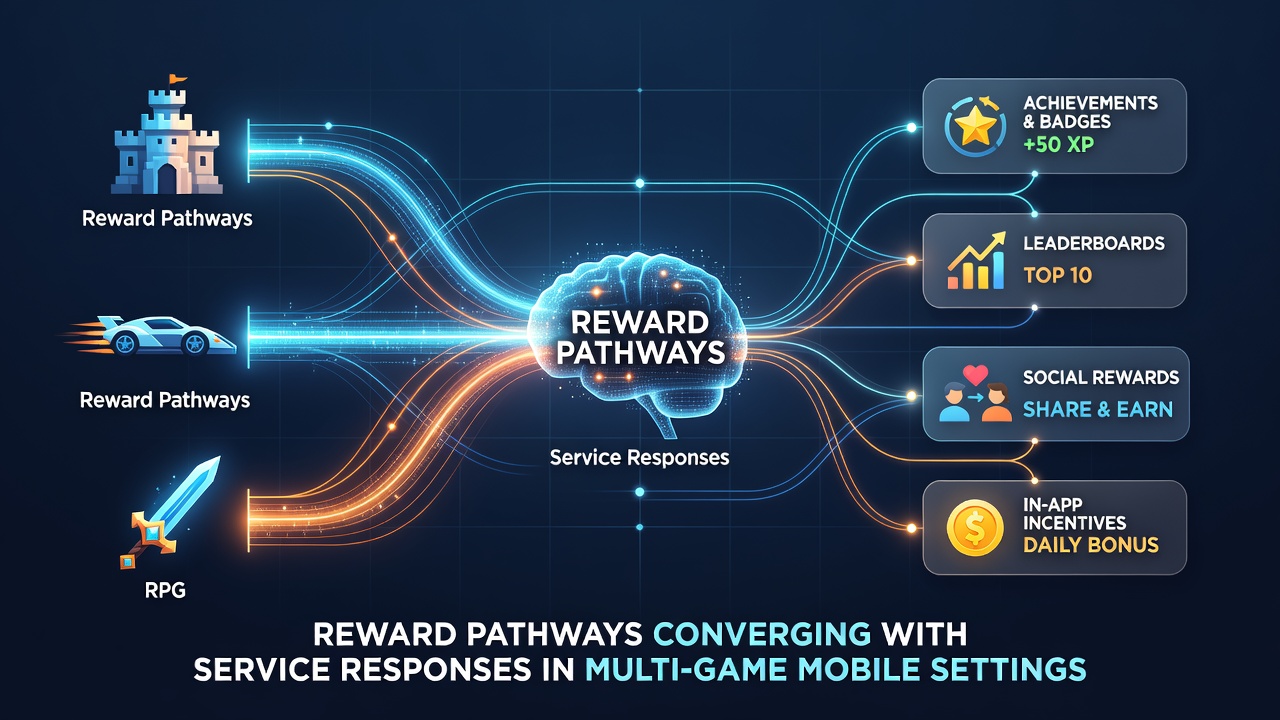
Multi-game mobile platforms continue to integrate reward pathways that align with service response mechanisms, creating structured interactions between player progression systems and support operations. These convergences appear across puzzle, strategy, and simulation formats where users switch between titles within a single ecosystem. Data from 2025 industry tracking shows that 68 percent of active mobile accounts engage with at least three distinct game categories simultaneously, which has prompted developers to synchronize reward triggers with service protocols.
Core Mechanics of Reward Pathways
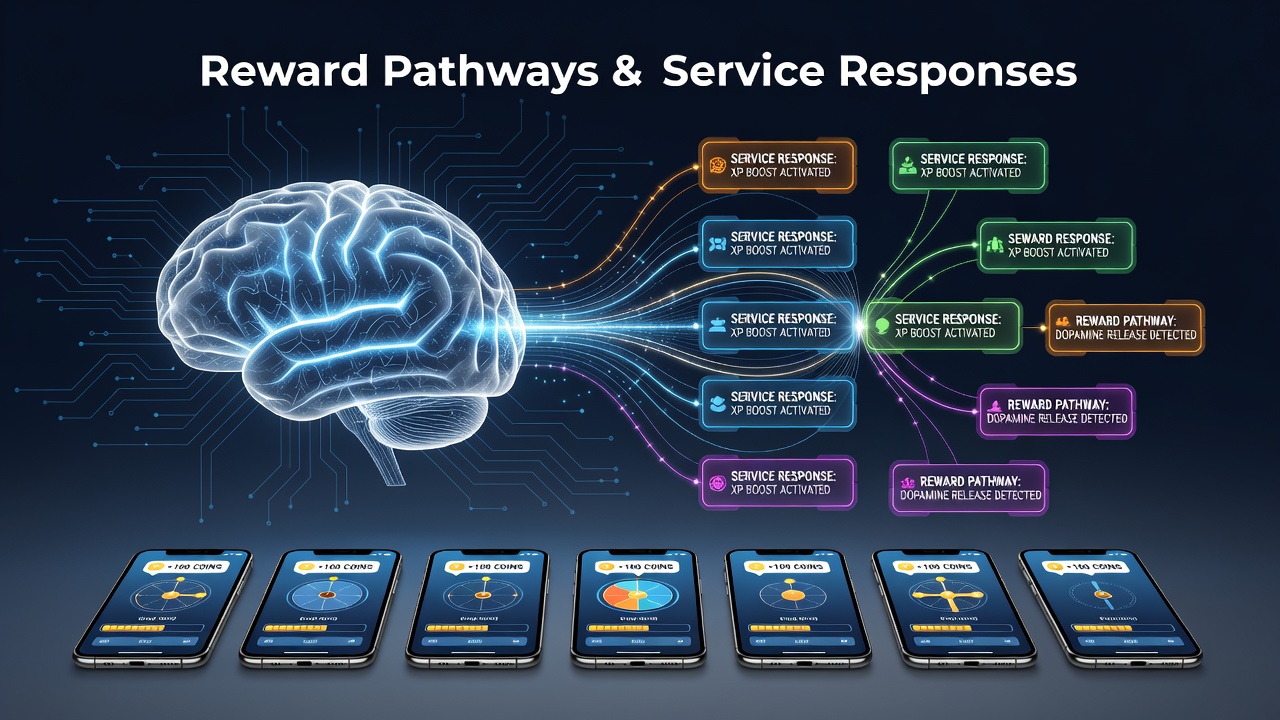
Reward pathways operate through layered progression trees that span multiple games, allowing points, badges, and virtual currency earned in one title to influence availability in others. Researchers at several academic institutions have documented how these cross-game transfers activate dopamine-related feedback loops documented in behavioral studies, while also generating data logs that service teams monitor for intervention points. When a user reaches a milestone in a strategy game, the system automatically flags the account for potential service outreach if transaction patterns indicate stalled progress in linked simulation titles.
Service responses incorporate these same data streams to prioritize support tickets. Automated systems route queries based on reward status, directing high-progression users toward specialized agents who can adjust bonus allocations or clarify eligibility rules across formats. This integration reduces average response times by routing issues to teams familiar with the specific reward mechanics involved.
Service Response Integration Patterns
Support operations now embed reward pathway monitoring into standard workflows. Agents review account histories that display reward accumulation across game categories before responding to inquiries about missing credits or eligibility disputes. In June 2026, platform operators reported a 22 percent increase in resolved cases after implementing unified dashboards that display both reward ledgers and service interaction histories side by side.
These dashboards pull from centralized databases that track every reward event alongside every support contact. When a player reports an issue with a cross-game transfer, agents can immediately reference the originating reward trigger and any prior service adjustments applied to the account. This approach minimizes repeated explanations and allows responses to reference exact transaction sequences rather than general policy statements.
Cross-Format Data Sharing
Platforms that host multiple game types share reward and service data through standardized APIs. This enables consistent policy application whether a user plays a casual match-three title or a resource-management game. According to findings published by the Canadian Office of Consumer Affairs, synchronized data environments have reduced duplicate support contacts by 31 percent in markets where operators adopted unified logging by early 2026.
Players who encounter reward delays in one format often receive proactive messages that reference activity in other titles. These messages draw from service logs that note previous interactions, allowing the system to suggest adjustments that align with established reward rules across the portfolio. The process relies on rule-based algorithms that match reward events to service history without requiring manual review for every case.
Regulatory Context and Reporting Standards
Regional regulators have begun requesting aggregated reports that combine reward distribution metrics with service response statistics. The Australian Communications and Media Authority issued updated guidelines in late 2025 that require operators to demonstrate how reward pathways connect to complaint resolution processes. These requirements focus on transparency around cross-game transfers and the handling of associated support requests.
Operators maintain audit trails that log every reward issuance alongside the service actions taken in response to user queries. These records help demonstrate compliance during periodic reviews and provide datasets for internal performance analysis. Figures released in mid-2026 indicate that platforms meeting these reporting standards processed 19 percent more support interactions per agent hour than those still operating separate reward and service systems.
Future Development Directions
Development teams continue refining the connections between reward engines and service interfaces. Planned updates scheduled for the second half of 2026 include expanded use of predictive models that anticipate service needs based on reward velocity across game formats. These models draw from historical patterns where rapid reward accumulation in one title correlates with increased support volume in another.
Testing phases have shown that preemptive service prompts triggered by reward data can lower overall ticket volume while maintaining user satisfaction metrics. The approach treats reward pathways and service responses as interconnected components rather than isolated functions, reflecting the operational reality of multi-game mobile environments where users move fluidly between titles.
Conclusion
The convergence of reward pathways with service responses continues to reshape operational practices in multi-game mobile settings. Centralized data systems, synchronized reporting requirements, and integrated support workflows represent the current state of implementation across major platforms. Ongoing refinements scheduled through 2026 focus on predictive capabilities that link reward events directly to service resource allocation, maintaining consistency across diverse game formats and user behaviors.